Colombia

COLOMBIA: A campesino initiative to defend human rights.

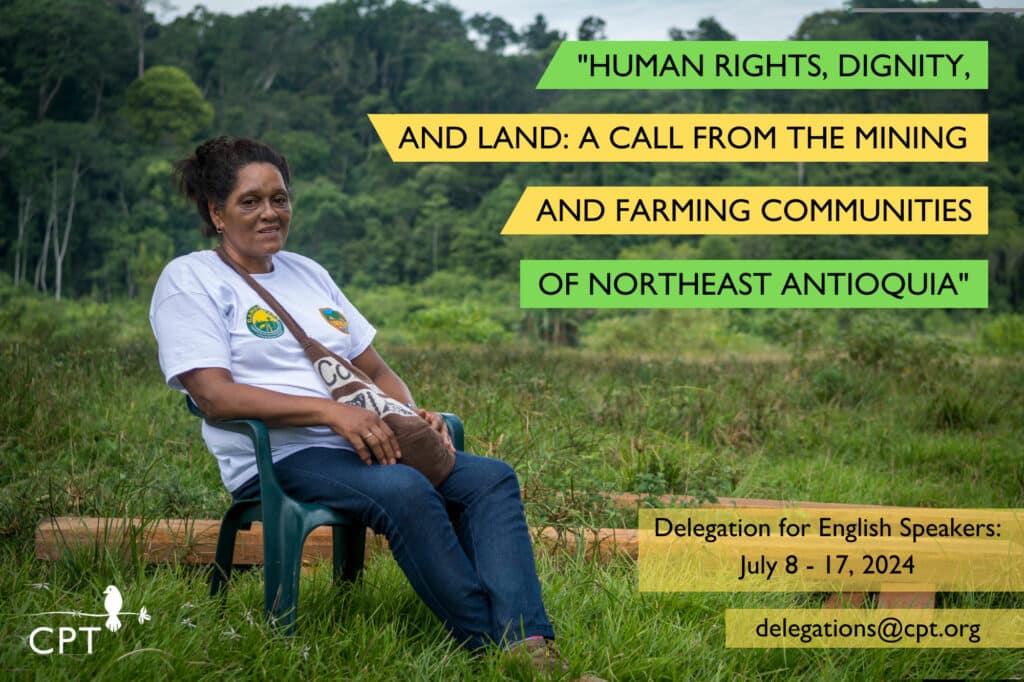
The Corporation for Humanitarian Action, Coexistence, and Peace in the Northeast of Antioquia, CAHUCOPANA, is a campesino organization, i.e. an organization of people from rural areas, the primary objective of which is to "struggle and build solutions to the humanitarian crises and the human rights issues plaguing rural communities in the municipalities of Segovia and Remedios, Northeastern, Antioquia.ā€  The region is rich in natural resources like water, wildlife, and minerals, including gold, which is the main source of income for the region.  Gold mining has triggered countless conflicts that have claimed the lives of many campesinos and displaced thousands in the struggle with large national and transnational companies.  These companies push campesinos off their land and damage the environment as they extract resources.

Click here to see video.


COLOMBIA URGENT ACTION: Call on Colombian government to stop paramilitary tour of terror in Southern Bolivar

"Complaints have been persistent, warning about the increased presence of paramilitaries in the majority of municipalities in the south of Bolivar.  More than forty murders, massacres, and forced displacements in the municipalities and outlying areas of Tiquisio and Montecristo, hamlets of Malena, centre Quebrada, Tagual, Pinch, Tenche and other nearby cities have been brought to the attention of the national and departmental (state) governments.  Local communities have mobilized to demand the protection of the national government.  The government has done nothing to prevent these things."

 FEDERACIƓN AGROMINERA DEL SUR DE BOLƍVAR - FEDEAGROMISBOL

…

ACT NOW!

Copy and paste the Spanish text of the message below into an email.

 In the "To:" field, include the following email addresses:

In the "Cc:" field, include your embassy if you are a Canadian or U.S. citizen

U.S. Ambassador to Colombia: AmbassadorB@state.gov

Canadian Ambassador to Colombia: bgota@international.gc.ca  


WHAT THE  BELOW MESSAGE IN SPANISH SAYS:

Subject: Protection needed for the people of Southern Bolivar

 To Whom It May Concern:

My name is ____(name)____ and I am from __(country)__.  I am writing because I am deeply concerned about the safety and well being of the people of Southern Bolivar.  There have been over forty assassinations in 2011 in the region, as well as increased paramilitary presence.

 I ask the Colombian government to convene immediately the Southern Bolivar Roundtable for Dialogue and respond to the concerns of the communities.  Also, I request the immediate compliance with the Precautionary Measures granted by the Inter-American Human Rights Commission.  I urge all authorities to respect the autonomy, dignity, and human rights of the Colombian people and to investigate the recent violence in the region and paramilitary advances.

Sincerely,

(Your name)

MESSAGE IN SPANISH (FOR E-MAILING)

Asunto: Violencia en Sur de BolĆ­var

Estimados SeƱores,

 Yo soy ___(tu nombre)___ de ___(tu paĆ­s)__. Estoy escribiendo porque estoy muy preocupado/a por la seguridad y bienestar de la gente de Sur de BolĆ­var. MĆ”s de 40 asesinatos en la región en el aƱo 2011. TambiĆ©n, ha aumentado la presencia de paramilitares.

Pido al gobierno colombiano convocar de manera inmediata la Mesa de Interlocución del sur de Bolívar y responder a las preocupaciones de las comunidades. También ruego todas autoridades respetar la autonomía, dignidad, y los derechos humanos de la población colombiana e investigar inmediatamente la violencia reciente en la región.

Atentamente,

 (tu nombre)

COLOMBIA: U.S. wants Free Trade Agreement with Colombia even after August massacre and other human rights abuses in Magdalena Medio region.

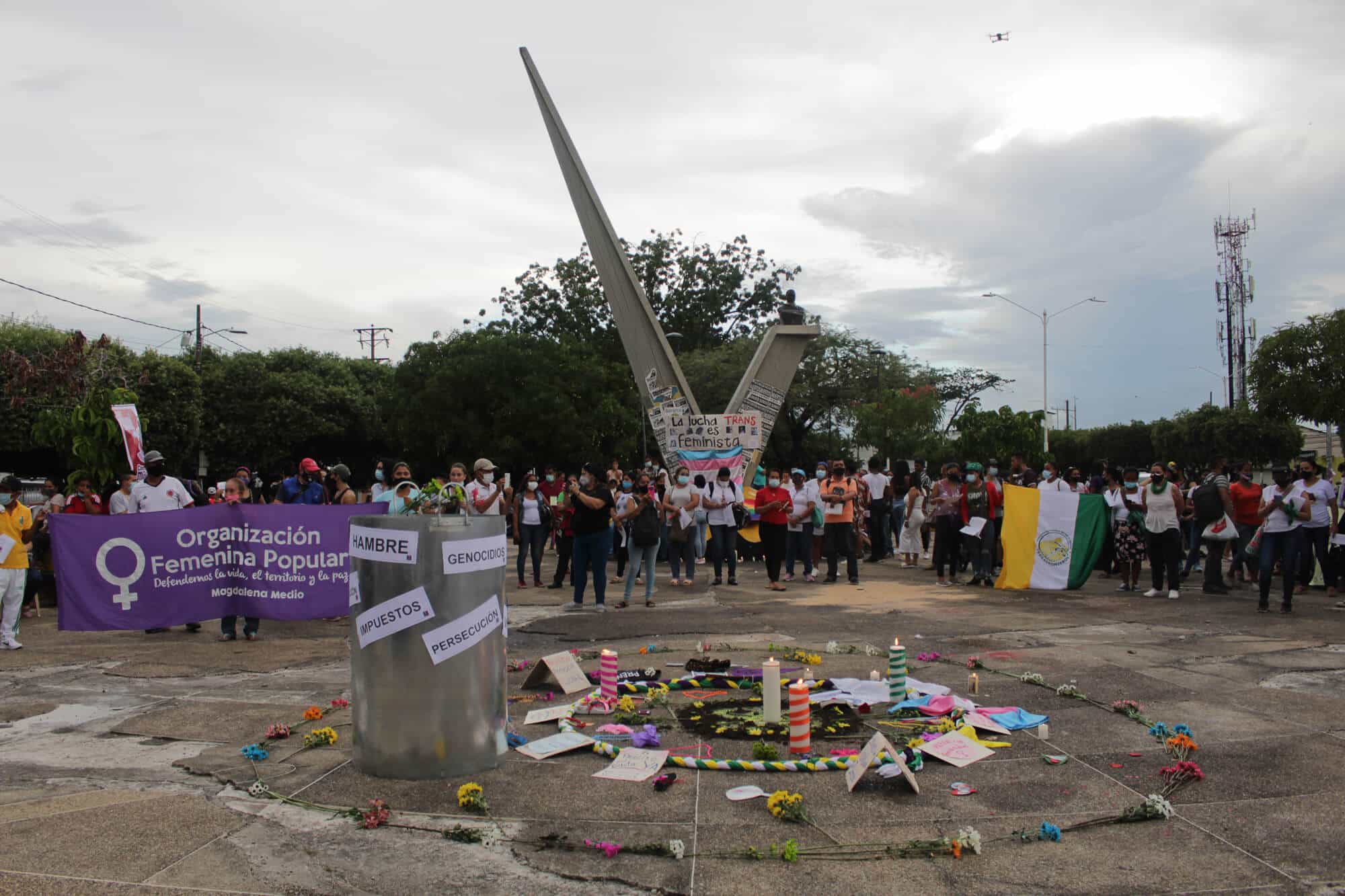
 While the United States considers a Free Trade Agreement (FTA) with Colombia, the human rights situation in the Magdalena Medio region of Colombia has deteriorated dramatically, culminating in the 17 August 2011 massacre in the township of El Dorado.             

 The United States House of Representatives and Senate will probably vote on the long standing FTA when they return from their congressional break, asserting that the human rights situation in Colombia is improving.  However, a wave of human rights violations, assassinations, and massacres has shaken the region.  For example, in the city of Barrancabermeja, from 13-18 August, the organization Human Rights Workers' Forum of Barrancabermeja (Espacio de Trabajadores y Trabajadoras de Derechos Humanos) documented two assassinations, two forced disappearances, five attempted assassinations, and the kidnapping of three contract workers.        

COLOMBIA REFLECTION: Walking with God in a fragile world

 In the summer of 2007, I traveled to Colombia for a reservist stint with Christian Peacemaker Teams.  On the flight, I was reading a book of essays about 9-11 titled Walking with God in a Fragile World.  At first it seemed strange to be reading about this act of violence committed in the United States when I was on my way to confront violence in Colombia.  But the more I read, the more relevant the essays seemed.   While violence in Colombia appears in many forms—fumigations, threats against community leaders, displacement—it is no less catastrophic than the attack on the Twin Towers in its impact on human lives. 

COLOMBIA: Peoples' Forum for Peace in Colombia--"Dialogue is the Answer"

 Those most impacted by the conflict in Colombia are seldom heard from and almost never consulted.  They are the indigenous, Afro-Colombian and campesinos from rural sectors all over the country.  They travelled great distances to meet in Barrancabermeja from 12-15  August, to work out and propose their own solution to a conflict that continues to threaten their lives, their traditional lands, their livelihoods, and cultural identities.

COLOMBIA URGENT PRAYER REQUEST: Media glossing over the murders of sixteen people in the last week.


The foreign and Colombian media are portraying Colombia as a nation at peace while it hosts the FIFA (FĆ©dĆ©ration Internationale de Football Association) U-20 games.  Unfortunately, the media are glossing over some of violent episodes that have occurred over the last week.  Below are a few examples, mostly from the regions where CPT’s Colombia team works:

COLOMBIA: The miracle of Las Pavas continues


 Christian Peacemaker Jenny Rodriguez and I visited the community of Las Pavas last month (May 2011).  It was good to see them back on their land, where I first met them in March of 2009.  The Colombian Constitutional Court has recognized that the community's claims on these lands have merit, so the likelihood of further displacements seems remote.

 However, despite the court ruling, and despite the Ministry of the Environment's assessment that palm oil cultivation would adversely affect these lands, the palm oil company Aportes San Isidro continues to occupy these lands.  Some of its personnel, protected by police, are living about ten meters from the community's homes.  Aportes San Isidro is unlikely to cease its operations until the Colombia legal system annuls its title to the land.  Only then can the families of Las Pavas receive their registration as the legitimate title-holders.

COLOMBIA REFLECTION: From the center to the margins

 In the beginning of his Gospel, Mark lays the foundation of Jesus' mission to show the disciples and us a new way to salvation.  At that time, the Temple served as the center of Jewish life, the place where the economic transactions and social and religious rituals were supposed to sustain the community.  However, often these transactions and rituals benefited only those in power and oppressed the poor.  When Jesus arrives on the scene from a small town in Palestine he doesn't go to the Temple.  Instead, he meets up with John the Baptist in the wilderness.  Here is where he starts his mission.   

COLOMBIA: Maybe you shouldn't join our CPT July delegation (but apply immediately if you should)


Maybe you shouldn't join the Christian Peacemaker Team delegation to northeast AntioquĆ­a.  Maybe you are like those activists I met during my speaking tour in Canada, whom I admire because they are actively in solidarity with Colombians resisting oppression and violence without ever even having met any of them.  If you are such a person, there is probably no good reason for you to spend money and contribute to global warming by taking a flight to Colombia to join a delegation.  Your energy and commitment are needed to do work in your home countries on behalf of victims of violence and neo-colonialism in Colombia. 

Speaking for myself, I need to be here in order not to feel overwhelmed by the magnitude of the problem.  I know the statistics, and understand the root of the problem: the violent dispossession and displacement of peoples from their traditional territory in order to pave the way for the looting of resources by lumber, oil, agro-industrial, bio-fuel and other corporate interests.  But in my case, the cerebral understanding of the problem only depresses me, and I end up feeling overwhelmed and powerless.  For me, it is my personal relationships with the victims and witnessing their tireless and courageous struggle for justice in the face of incredible odds and that keep me going. 

COLOMBIA: Men identified as belonging to the paramilitary group "Black Eagles" lurking in village of Santa Marta

 On Sunday 29 May 2011, the Corporation for Humanitarian Action Coexistence and Peace in Northeast Antioquia (CAHUCOPANA), learned of the 28 May presence of armed men in the village of Santa Marta in Northeast Antioquia.  The six men identified themselves as members of the paramilitary group "Aguilas Negras" (Black Eagles), carried rifles, and wore dark clothing.  The community also reported that while in the region this group was accompanied by a guerilla deserter with the alias "Jair."  They asked for "Lata,ā€ "Colacho,ā€ "Nando" and "Darius," which are nicknames of peasants living in the region.  Darius is now deceased.